


Justice, but not closure, for Braidwood couple who lost daughter to opioid addiction
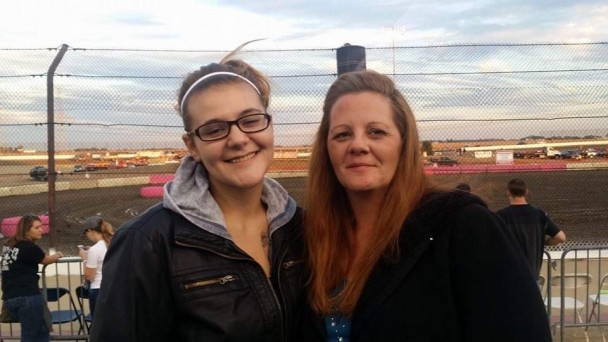
KIM EARLING AND her daughter, Samantha Kile, are seen in this undated photo. Samantha died in 2018 of an overdose of heroin and fentanyl while she was seven months pregnant. This month, the man who sold her the drugs was sentenced to eight years in prison for drug induced homicide. Photo provided.
For Kim and Chris Earling, there’s no such thing as closure.
Every day, the Braidwood couple continues on with the regular tasks of life. But all with a heavy weight on their shoulders—dealing with the death of their daughter, Samantha Kile.
Samantha was just two weeks shy of her 23rd birthday and seven months pregnant when she overdosed on fentanyl and heroin in November 2018. Kim Earling found her daughter face down in the bathtub in their Braidwood home at 4:30 a.m. Samantha’s unborn child, a son she had planned to name Jaxsen Michael, did not survive.
It was the start of a journey for the couple that is every parent's nightmare—finding any kind of peace after the death of a child.
For the Earlings, one component of searching for that peace was hoping the judicial system wouldn’t let them down, the way they still feel Samantha was let down for years.
On Aug. 2, Illinois Attorney General Kwame Raoul announced that Colin West, 27, of Gardner, pleaded guilty to the drug induced homicide of Samantha. West, who sold Samantha the drugs that ultimately killed her and her son, pleaded guilty in Grundy County Circuit Court to that charge, and unlawful possession of a controlled substance.
The night before she died, West and Samantha exchanged a series of online messages in which West arranged to meet her to sell her opioids. West was arrested in December 2019 and later admitted to Braidwood police that he sold her heroin on the night he last saw her.
West was sentenced to eight years in prison.
Kim Earling said there was a lot of back and forth ever since West was first arrested, and she and Chris were adamant that they push ahead with drug induced homicide, and not settle for a lesser charge.
On Aug. 2, during the sentencing, Kim Earling read a victim impact statement in court, telling West of the trauma and grief that she carries every day after the death of her only child.
“From the moment I found out I was pregnant, Samantha and I formed a bond that is very rare between mother and daughter,” she said. “She filled my soul with purpose. Her magnetic personality, her smile, her unforgettable laugh, her loving gypsy soul, taught me how to live each day to its fullest. Samantha and I were truly inseparable.”
The Earlings said that both the medical and judicial systems failed Samantha. The couple said their pleas for help to both law enforcement and medical providers went unanswered.
But in late 2017, Samantha was able to begin taking Vivitrol, a shot that blocks the effects of opioids. The shot was working. Samantha was clean, she was working, she bought a car.
Then in July of 2018, she found out she was pregnant. Without any data on how Vivitrol may interact with pregnancy, she was told not to use Vivitrol anymore. Her last shot was around the time she found out about her pregnancy. Her parents said her regular physician dropped her as a patient after that.
“Vivitrol, being a safety net in case she was tempted to use was an important part of her recovery process,” Kim said, adding that she felt the medical system had failed Samantha by offering no other help or guidance.
“I lost my world, my heart, my soul. My reason for living. My everything,” Kim said.
The Earlings credit the Braidwood Police Department, under the direction of Chief Todd Lyons and Detective Chris Altiery, with getting the case prosecuted.
“They all worked so hard on it, they really did,” Kim said of the investigators.
The couple was frustrated with the initial investigation, which began prior to Lyons’ appointment as police chief. The couple contend that evidence, including Samantha’s phone, was never logged correctly, and eventually went missing.
The police were able to gain access to Samantha’s Facebook account, which led to messages between Samantha and West, and eventually to West’s arrest.
The Earlings said that while West’s sentence is not as long as they had hoped, there is some justice that he is at least being held accountable.
“I want it to follow him around for the rest of his life,” Chris said.
Now, Kim says she wants to be an advocate, and a voice for those lost due to addiction. The couple won’t let Samantha’s death be just a cautionary tale.
“My next step is to figure out how to use her case as an example,” Kim said, adding that her hope is to bring some change to both the judicial and the medical systems when it comes to offering assistance and solutions for those who suffer with addiction, as well as their families.
“My goal is to push for Illinois to come up with [more laws]. If someone is knowingly taking something that can cause death, even heroin, it, to me, should be considered a suicide attempt,” Kim said. “They shouldn’t just issue Narcan then release them from the hospital a couple hours later. They need to be [treated]. They’re injecting poison into their veins, and then you add fentanyl on top of it. That would be no different than if I put rat poison in my husband’s soup. I’d be charged with murder. Fentanyl can kill you like that. And Sam was sober long enough that it killed her.”
Kim added that she’s gotten to this point thanks to the help of some intensive therapy.
“I’m never going to be healed from it, it’s always going to be there, parts of it are going to make me cry,” she said.
The couple is now working to educate the public not just on addiction, but on drug induced homicide laws, with help from the Drug Induced Homicide Foundation. The foundation is a national effort to make sure all drug overdose deaths are initially classified as a drug induced homicide, and provide law enforcement with a framework for how to handle overdose cases.
“Part of my goal is to try to educate people,” Kim said. “Go educate yourself. Stop the stigma.”
Her plan, she hopes, is to help make positive changes in the judicial and medical systems when it comes to addiction.
“I’m able to take this, take what happened to my daughter, and try my hardest until my last breath to change our system,” Kim said. “If they would have been there to help us, if they would have put her in jail when we asked them to, if they would have arrested her when we asked them to, if anything, the medical system or judicial would have listened, who knows where we would be right now. It’s not closure, but it gives me something.”
Category:
815 476-7966 | 111 S. Water Street, Wilmington, IL 60481
